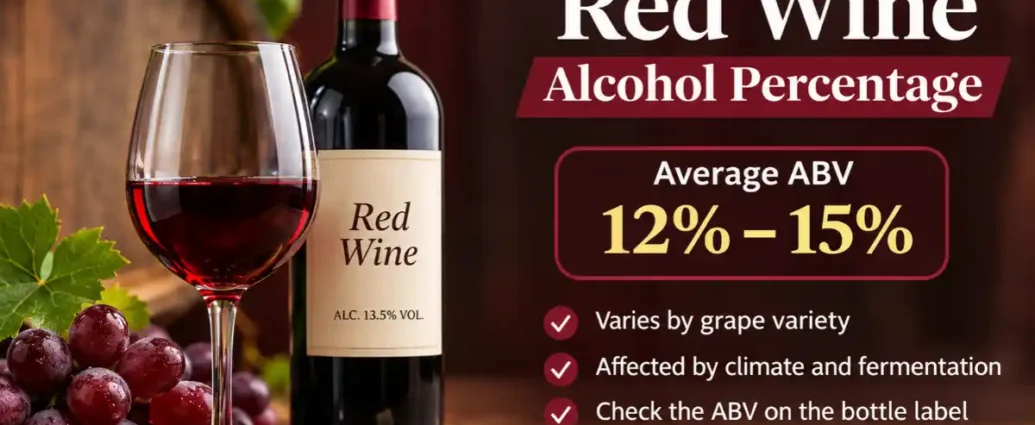
Red wine is one of the most popular alcoholic beverages worldwide, known for its rich colour, distinctive flavour and variety of grape-based styles. However, one of the most common questions people have before purchasing a bottle is about the red wine alcohol percentage. The alcohol content can vary depending on the grape variety, fermentation process, climate and winemaking techniques.
Generally, red wine contains around 12% to 15% alcohol by volume (ABV), although some lighter varieties contain less alcohol, while stronger and fortified varieties can have considerably higher percentages. Understanding the alcohol percentage helps consumers compare different wine bottles and identify their actual alcohol content.
In this article, we will explain the average red wine alcohol percentage, alcohol content by wine type, popular red wine varieties, bottle-wise alcohol calculations and how to check ABV on a wine label.
Red Wine Alcohol Percentage in 2026
The average alcohol percentage of regular red wine generally ranges between 12% and 15% ABV. However, the exact percentage depends on the type of grapes used and how much natural sugar is converted into alcohol during fermentation.
Lighter red wines usually have a lower alcohol percentage, whereas full-bodied red wines often contain higher alcohol levels. Fortified red wines are different because additional spirits may be added during production, increasing their alcohol content.
| Red Wine Category | Average Alcohol Percentage |
|---|---|
| Light-bodied red wine | 11%–13% |
| Medium-bodied red wine | 12%–14% |
| Full-bodied red wine | 13.5%–15% |
| High-alcohol red wine | 14%–16% |
| Fortified red wine | 15%–22% |
What Is the Average Alcohol Percentage in Red Wine?
The average alcohol percentage in regular red wine is approximately 13% to 14% ABV. This means that 100 ml of wine containing 13% ABV has approximately 13 ml of pure alcohol.
For example, a red wine bottle labelled 13.5% ABV contains 13.5% alcohol by volume. The remaining volume consists mainly of water and other naturally occurring wine components.
Different red wine varieties have different alcohol levels. Pinot Noir is generally lighter, while Cabernet Sauvignon, Shiraz and Zinfandel can have higher alcohol concentrations.
The percentage printed on the bottle is the most reliable way to identify the alcohol content of a particular wine.
Red Wine Alcohol Percentage by Popular Types
Not every red wine has the same alcohol percentage. Some varieties are known for their lighter body and moderate alcohol levels, while others are naturally richer and stronger.
The following table provides approximate alcohol ranges for popular red wine varieties.
| Red Wine Type | Alcohol Percentage |
|---|---|
| Pinot Noir | 12%–14% |
| Merlot | 13%–14.5% |
| Cabernet Sauvignon | 13%–15% |
| Shiraz/Syrah | 13%–15.5% |
| Malbec | 13%–15% |
| Zinfandel | 14%–16% |
| Sangiovese | 12.5%–14.5% |
| Tempranillo | 12.5%–14.5% |
| Grenache | 13%–15% |
| Gamay | 11%–13.5% |
1. Pinot Noir Alcohol Percentage
Pinot Noir generally contains around 12% to 14% alcohol. It is a lighter-bodied red wine known for its smooth texture, fruity aroma and delicate flavour.
It is commonly associated with red fruit flavours such as cherry, raspberry and strawberry. Its alcohol percentage can vary depending on the growing region and production method.
2. Merlot Alcohol Percentage
Merlot generally contains approximately 13% to 14.5% alcohol. It is a medium- to full-bodied red wine recognised for its soft tannins and smooth taste.
Its flavour profile often includes plum, blackberry and cherry notes. Different Merlot bottles may have slightly different alcohol concentrations.
3. Cabernet Sauvignon Alcohol Percentage
Cabernet Sauvignon usually contains around 13% to 15% alcohol. It is a popular full-bodied red wine with a strong flavour profile, noticeable tannins and dark fruit characteristics.
Blackcurrant, blackberry and cedar are common flavour notes. Warmer growing regions can produce Cabernet Sauvignon with comparatively higher alcohol levels.
4. Shiraz Alcohol Percentage
Shiraz generally contains approximately 13% to 15.5% alcohol. It is known for its bold flavour, deep colour and full-bodied character.
Depending on its origin, Shiraz may have flavours of blackberry, black pepper, plum and spices. Some warmer-climate versions can contain higher alcohol levels.
5. Malbec Alcohol Percentage
Malbec generally contains around 13% to 15% alcohol. It is a popular red wine variety, particularly associated with Argentina.
It usually has a deep purple-red colour and rich flavours of blackberry, plum and dark cherry. Its alcohol percentage depends on the grapes and production conditions.
Red Wine Alcohol Percentage by Bottle Size
The total quantity of alcohol in a red wine bottle depends on two things: the bottle’s volume and its ABV percentage.
A 750 ml bottle containing 13% ABV has approximately 97.5 ml of pure alcohol. Similarly, a 13.5% ABV bottle contains approximately 101.25 ml of pure alcohol.
Here is an example using red wine with 13% ABV.
| Bottle Size | Pure Alcohol at 13% ABV |
|---|---|
| 100 ml | 13 ml |
| 150 ml | 19.5 ml |
| 180 ml | 23.4 ml |
| 375 ml | 48.75 ml |
| 500 ml | 65 ml |
| 750 ml | 97.5 ml |
| 1 litre | 130 ml |
| 1.5 litres | 195 ml |
Red Wine Alcohol Percentage: 12%, 13%, 14% and 15% Comparison
Red wine bottles are available with different alcohol concentrations. Even a small difference in ABV changes the amount of pure alcohol in the same serving size.
The following comparison uses a 150 ml wine serving.
| Red Wine ABV | Pure Alcohol in 150 ml |
|---|---|
| 12% | 18 ml |
| 13% | 19.5 ml |
| 14% | 21 ml |
| 15% | 22.5 ml |
| 16% | 24 ml |
For example, 150 ml of wine containing 15% ABV has more pure alcohol than the same quantity of wine containing 12% ABV.
Therefore, checking the alcohol percentage is important when comparing wine bottles.
What Does ABV Mean in Red Wine?
ABV stands for Alcohol by Volume. It is a standard measurement used to indicate the amount of pure alcohol present in an alcoholic beverage.
For example:
- 12% ABV: 12 ml of pure alcohol in every 100 ml of wine.
- 13% ABV: 13 ml of pure alcohol in every 100 ml of wine.
- 14% ABV: 14 ml of pure alcohol in every 100 ml of wine.
- 15% ABV: 15 ml of pure alcohol in every 100 ml of wine.
ABV makes it easier to compare the alcohol concentration of different wines, beers and spirits.
It is important to remember that ABV measures alcohol concentration, not the total amount of alcohol in an entire bottle. Bottle size also matters.
Factors That Affect Red Wine Alcohol Percentage
Several factors influence the final alcohol concentration of red wine. The grape variety is important, but climate, sugar content and fermentation techniques also play significant roles.
1. Grape Sugar Content
Grapes naturally contain sugar, which yeast converts into alcohol during fermentation. Generally, grapes with higher sugar levels have the potential to produce wine with a higher alcohol percentage.
The final ABV depends on how much sugar is converted into alcohol and whether fermentation is stopped before all fermentable sugar is consumed.
2. Climate and Temperature
Climate plays an important role in determining the alcohol content of wine. Grapes grown in warmer regions often develop higher sugar levels because they receive more sunlight and heat during the growing season.
As a result, wines produced from these grapes may have higher alcohol percentages. Cooler-climate grapes may develop comparatively lower sugar levels, producing lighter wines.
3. Fermentation Process
Fermentation is the process through which yeast converts natural grape sugar into ethanol and carbon dioxide.
Winemakers control fermentation conditions, including temperature, yeast selection and fermentation duration. These factors influence the final flavour, texture and alcohol concentration of red wine.
4. Grape Variety
Different grape varieties naturally have different characteristics. Some varieties are commonly used to produce lighter wines, while others are associated with richer and more concentrated styles.
For example, Pinot Noir is generally lighter than many Cabernet Sauvignon and Shiraz wines.
5. Winemaking Techniques
Winemaking methods can also affect the final alcohol percentage. Producers may use different fermentation approaches, grape selection methods and techniques to achieve a particular wine style.
Fortification is another technique in which additional distilled alcohol is introduced, creating a stronger wine.
How to Check Alcohol Percentage on a Red Wine Bottle
Checking the alcohol percentage of red wine is simple. Most wine bottles display the alcohol concentration on their front or back labels.
Follow these steps:
- Pick up the red wine bottle and check its front label.
- Look for the words Alcohol, Alc. Vol. or ABV.
- Find the percentage printed beside the alcohol information.
- Check the bottle size to understand the total quantity of wine.
- Use the ABV percentage to calculate the amount of pure alcohol.
For example, if a bottle displays 13.5% Alc./Vol., it means that 13.5% of its total volume is pure alcohol.
In India, alcoholic beverage labels also follow applicable labelling requirements, so consumers should check the product label for the declared alcohol content.
Red Wine vs White Wine Alcohol Percentage
Red and white wines are both produced through grape fermentation, but their alcohol percentages can differ depending on the grape variety, climate and winemaking process.
Red wines often have alcohol concentrations between 12% and 15%, while white wines commonly fall between 8% and 14%.
| Comparison | Red Wine | White Wine |
|---|---|---|
| Common Alcohol Range | 12%–15% | 8%–14% |
| Colour | Red, ruby or purple | Pale yellow or golden |
| Main Grapes | Red grape varieties | White or skin-free red grapes |
| Body | Light to full-bodied | Light to full-bodied |
| Common Varieties | Merlot, Shiraz, Pinot Noir | Chardonnay, Sauvignon Blanc, Riesling |
Red Wine vs Beer vs Whisky Alcohol Percentage
Red wine, beer and whisky have significantly different alcohol concentrations. Comparing their ABV percentages helps explain why the same volume of different alcoholic beverages does not contain the same quantity of alcohol.
| Alcoholic Beverage | Approximate Alcohol Percentage |
|---|---|
| Regular Beer | 4%–6% |
| Strong Beer | 6%–8% |
| Red Wine | 12%–15% |
| White Wine | 8%–14% |
| Whisky | Around 40% |
| Vodka | Around 40% |
| Rum | Around 35%–40% |
The percentages can vary by brand and product.
A beverage with a higher ABV contains more alcohol per equal volume. However, the actual alcohol consumed also depends on the serving size.
Is Red Wine Stronger Than Other Wines?
Red wine is not always stronger than other types of wine. Its alcohol percentage depends on the grape variety, growing conditions and fermentation process.
Some full-bodied red wines contain 14% to 15% alcohol, while certain white wines may contain around 12% to 14%. Fortified wines can have even higher alcohol concentrations because additional spirits are added during production.
Therefore, it is better to compare the ABV printed on individual bottles rather than assume that every red wine is stronger than white or sparkling wine.
Does Sweet Red Wine Have a Higher Alcohol Percentage?
Sweetness and alcohol percentage are two different characteristics of wine. A sweet red wine does not automatically contain more alcohol than a dry red wine.
The sweetness of wine depends on the amount of residual sugar remaining after fermentation. Alcohol content depends on how much sugar has been converted into ethanol.
Some sweet red wines have relatively low alcohol concentrations because fermentation is stopped early. Others may have higher alcohol content, depending on their production method.
Therefore, consumers should check both the sweetness information and the ABV percentage on the bottle.
What Is the Difference Between Regular and Fortified Red Wine?
Regular red wine is produced through the fermentation of grape juice, while fortified red wine is made by adding distilled alcohol during production.
This additional alcohol increases the overall strength of fortified wine.
| Feature | Regular Red Wine | Fortified Red Wine |
|---|---|---|
| Production | Grape fermentation | Wine with added spirits |
| Alcohol Percentage | Usually 12%–15% | Often 15%–22% |
| Taste | Varies from light to bold | Often richer and stronger |
| Examples | Merlot, Pinot Noir | Port-style wine |
Port is a well-known example of fortified wine. Its alcohol concentration is generally higher than that of ordinary table wine.
Is Red Wine Alcohol Percentage the Same in Every Bottle?
No, the alcohol percentage is not the same in every red wine bottle. Even two bottles of the same grape variety can have different ABV levels.
The differences may occur because of variations in grape-growing regions, weather conditions, harvesting time and fermentation techniques.
For example, one Cabernet Sauvignon bottle may contain 13% alcohol, while another may contain 14.5%.
The brand, grape variety and bottle appearance alone cannot accurately determine the alcohol percentage. Always check the ABV information printed on the label.
Important Things to Know About Red Wine Alcohol Content
Before comparing red wine, keep these important points in mind:
- Average alcohol percentage: Regular red wine generally contains 12%–15% ABV.
- ABV meaning: It measures alcohol as a percentage of the total beverage volume.
- Bottle size: A 750 ml bottle contains more total alcohol than a 375 ml bottle with the same ABV.
- Grape variety: Different grapes can produce wines with different alcohol concentrations.
- Sweetness: Sweet wine does not necessarily have a higher alcohol percentage.
- Fortified wine: Additional spirits can increase the alcohol concentration.
- Bottle label: The printed ABV is the best way to identify a particular wine’s alcohol content.
Health and Safety Considerations
Red wine contains alcohol, and consuming it can affect judgement, coordination and reaction time. The effects depend on the amount consumed, alcohol concentration, drinking speed and individual factors.
It is important not to consider red wine a health supplement or assume that its alcohol content makes it harmless. Alcohol consumption carries health risks, including an increased risk of certain diseases.
Avoid alcohol if you are under the legal drinking age, pregnant, driving, taking medicines that interact with alcohol or have been advised to avoid it for medical reasons. Never drive after consuming alcohol.
Conclusion
The red wine alcohol percentage generally ranges between 12% and 15% ABV, although the exact concentration depends on the grape variety, climate, fermentation process and winemaking techniques. Lighter wines such as Pinot Noir often contain comparatively less alcohol, while Cabernet Sauvignon, Shiraz and Zinfandel can have higher concentrations.
Fortified red wines are different because additional spirits increase their alcohol content. When comparing different bottles, always check the ABV printed on the label and consider the bottle size to understand the total alcohol content.
Understanding these differences makes it easier to identify the alcohol concentration of different red wine varieties.
FAQs
What is the alcohol percentage in red wine?
Regular red wine generally contains approximately 12% to 15% alcohol by volume (ABV). However, the exact percentage depends on the grape variety and winemaking process.
Is red wine 12% or 14% alcohol?
Red wine can contain either 12% or 14% alcohol, depending on the particular bottle. Lighter varieties often have lower ABV, while full-bodied wines may contain higher concentrations.
Which red wine has the highest alcohol percentage?
Zinfandel, Shiraz and some Cabernet Sauvignon wines can have relatively high alcohol concentrations, sometimes reaching 15% to 16% ABV or more.
How much alcohol is in a 750 ml red wine bottle?
A 750 ml bottle containing 13% ABV has approximately 97.5 ml of pure alcohol. The actual amount depends on the bottle’s declared ABV.
Is red wine stronger than beer?
Generally, yes. Red wine commonly contains 12%–15% alcohol, whereas regular beer usually contains around 4%–6% alcohol.
Does red wine contain 15% alcohol?
Some red wines contain 15% alcohol, but not all. Many regular red wines have alcohol concentrations between 12% and 14%.
What is the alcohol percentage in Pinot Noir?
Pinot Noir generally contains approximately 12% to 14% ABV, although the percentage varies by producer and region.
What is the alcohol percentage in Cabernet Sauvignon?
Cabernet Sauvignon generally contains around 13% to 15% ABV. Some bottles may have higher or lower concentrations.
Does sweet red wine contain more alcohol?
No. Sweetness does not automatically mean higher alcohol content. Sweet red wines can have either low or high ABV depending on their production process.
How can I check the alcohol percentage of red wine?
Check the front or back label of the bottle. Look for the terms ABV, Alc. Vol. or Alcohol by Volume to identify its declared alcohol concentration.
Also, Check More Alcohol Percentage by alcohalpricenow.com.