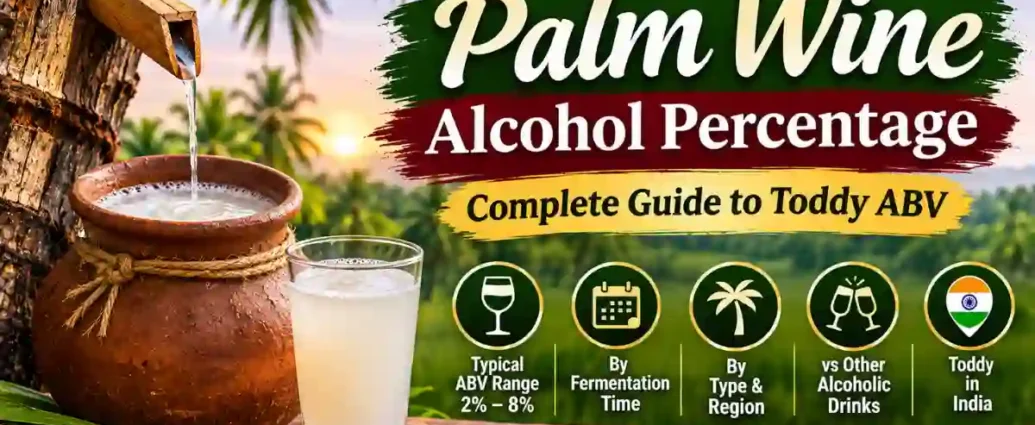
Palm wine is a traditional fermented beverage made from the natural sap of palm trees. It is consumed in several African and Asian countries and is commonly known as toddy, taadi or kallu in different regions of India. Its taste can range from sweet and mildly fizzy to sour and strongly fermented.
The palm wine alcohol percentage generally ranges from around 2% to 8% ABV, although the actual strength can be lower or higher depending on fermentation and storage conditions. Unlike standardised bottled alcoholic drinks, traditional palm wine does not have one fixed alcohol percentage.
In this guide, we will cover palm wine alcohol percentage by fermentation time, palm type and region, its comparison with other alcoholic drinks, alcohol in different serving sizes, Indian toddy information, calories, legal considerations and safety tips.
What Is Palm Wine?
Palm wine is a naturally fermented alcoholic drink prepared from sap collected from certain palm trees. The sap contains natural sugars that become food for yeast and other microorganisms. During fermentation, these sugars are converted into alcohol, carbon dioxide and other compounds.
Fresh palm sap generally tastes sweet and may have very little alcohol. As fermentation progresses, the drink can become more acidic, fizzy and alcoholic. Its appearance may be clear, cloudy or slightly milky, depending on the palm species and preparation method.
Palm wine is traditionally consumed in countries such as India, Nigeria, Ghana, Cameroon and Sri Lanka. Different regions use different palm varieties and local production techniques, which influence the beverage’s final taste and alcohol content.
Palm Wine Alcohol Percentage at a Glance
| Palm Wine Type | Approximate Alcohol Percentage |
|---|---|
| Fresh palm sap | 0%–2% ABV |
| Early fermented palm wine | 1%–3% ABV |
| Moderately fermented palm wine | 3%–6% ABV |
| Well-fermented palm wine | 6%–8% ABV |
| Strongly fermented batches | May exceed 8% ABV |
Palm Wine Alcohol Percentage by Fermentation Time
Fermentation is the main process responsible for the development of alcohol in palm wine. Natural yeast consumes the sugars in the sap and produces ethanol and carbon dioxide. The beverage gradually changes in taste, smell and composition.
| Fermentation Stage | Possible Alcohol Percentage | General Characteristics |
|---|---|---|
| Freshly collected | 0%–2% ABV | Sweet and light |
| Early fermentation | 1%–3% ABV | Slightly fizzy and mildly sour |
| Overnight fermentation | Around 3%–5% ABV | More noticeable fermented taste |
| Around 24 hours | Around 4%–7% ABV | Less sweet and more acidic |
| Extended fermentation | Around 5%–8% ABV or higher | Stronger and more sour |
Fresh Palm Wine
Freshly collected palm sap usually contains a high proportion of natural sugar and little alcohol. It may taste sweet and mildly refreshing, with a light natural fizz if fermentation has already started.
However, fresh sap should not automatically be considered alcohol-free. Fermentation can begin soon after collection, sometimes before the beverage reaches the consumer.
Overnight Fermented Palm Wine
After several hours, yeast activity can become more noticeable. The drink may lose some of its sweetness and develop a slightly sour taste.
Its alcohol percentage may increase during this period, but the actual level depends on the conditions in which the sap is collected and stored.
Palm Wine Fermented for 24–48 Hours
Longer fermentation can produce a more acidic and alcoholic beverage. Some traditional samples have recorded alcohol levels around 6.5% after 48 hours, although this is not a universal result.
A longer fermentation period does not guarantee a particular ABV. The exact alcohol content needs suitable testing.
Palm Wine Alcohol Percentage by Type and Region
Palm wine is prepared from different palm species, and the resulting beverage can vary in flavour, sugar content and fermentation behaviour.
| Palm Type | Common Beverage Name or Use | Alcohol Strength |
|---|---|---|
| Palmyra palm | Palmyra toddy, taal | Varies by fermentation |
| Coconut palm | Coconut toddy | Varies by fermentation |
| Date palm | Date palm toddy | Varies by fermentation |
| Oil palm | Oil palm wine | Varies by fermentation |
| Raffia palm | Raffia palm wine | Varies by fermentation |
Palm Wine in Different Countries
| Country or Region | Local Name | General Information |
|---|---|---|
| India | Toddy, taadi, kallu | Traditionally made from different palm varieties |
| Nigeria | Palm wine | Commonly produced from oil and raffia palms |
| Ghana | Palm wine | Traditional fermented palm sap |
| Cameroon | Palm wine | Consumed in several communities |
| Sri Lanka | Toddy or ra | Commonly associated with coconut palm sap |
| Indonesia | Tuak | Name used for some traditional fermented drinks |
| Philippines | Tuba | Traditional palm sap beverage |
Palm Wine vs Other Alcoholic Drinks
Palm wine is often compared with beer, wine and spirits because all these beverages contain ethanol. However, their alcohol concentrations are quite different.
| Alcoholic Drink | Typical Alcohol Percentage |
|---|---|
| Light beer | 2%–4% ABV |
| Regular beer | 4%–6% ABV |
| Palm wine | Often 2%–8% ABV |
| Table wine | 11%–15% ABV |
| Whisky | 40%–43% ABV |
| Vodka | Around 40% ABV |
| Rum | Around 37.5%–40% ABV |
Palm wine can be weaker than beer during early fermentation. However, a well-fermented batch may contain as much or more alcohol than regular beer. Whisky, vodka and rum are much more concentrated, meaning a small serving can contain a substantial quantity of pure alcohol.
These percentages are general ranges and vary between products and brands.
Toddy Alcohol Percentage in India
In India, palm wine is commonly known as toddy, taadi or kallu. It is traditionally produced in several regions using sap collected from palmyra, coconut and date palm trees.
The alcohol percentage of Indian toddy is not standardised nationwide. Freshly collected sap may have very little alcohol, while naturally fermented toddy can become considerably stronger. The fermentation process and storage conditions play an important role in determining its final strength.
Toddy is traditionally associated with states and regions such as:
- Kerala: Known locally as kallu, with coconut palm toddy being part of traditional food and drink culture.
- Andhra Pradesh: Toddy has a long association with local palm-tapping practices.
- Telangana: Traditional toddy is consumed in certain communities.
- Tamil Nadu: Palm-based beverages are associated with traditional tapping practices.
- West Bengal: Date palm sap and fermented date palm beverages are known in local traditions.
The actual alcohol content can vary from one producer and batch to another. A general figure should not be treated as the confirmed strength of every locally produced toddy.
How Much Alcohol Is in a Glass and a Bottle of Palm Wine?
The amount of pure alcohol in palm wine depends on the serving size and ABV. A larger serving contains more alcohol than a smaller serving if both have the same percentage.
| Serving Size | At 3% ABV | At 5% ABV | At 8% ABV |
|---|---|---|---|
| 100ml | 3ml | 5ml | 8ml |
| 150ml | 4.5ml | 7.5ml | 12ml |
| 200ml | 6ml | 10ml | 16ml |
| 250ml | 7.5ml | 12.5ml | 20ml |
| 500ml | 15ml | 25ml | 40ml |
| 750ml | 22.5ml | 37.5ml | 60ml |
How to Calculate Alcohol in Palm Wine
You can calculate the amount of pure alcohol using this formula:
Pure Alcohol (ml) = Serving Size (ml) × ABV ÷ 100
For example, if you have 250ml of palm wine containing 5% ABV:
250 × 5 ÷ 100 = 12.5ml of pure alcohol
This calculation is useful for understanding the alcohol quantity in different serving sizes. It does not indicate that the serving is safe for everyone.
Why Does Palm Wine Alcohol Percentage Change So Fast?
Palm wine can continue fermenting after collection. This is one of the main reasons its alcohol percentage can change during storage and transportation.
1. Natural Sugar Content
Palm sap contains natural sugars that yeast uses during fermentation. Differences in sugar content can influence the amount of alcohol that develops.
2. Yeast Activity
Naturally occurring yeast converts sugar into ethanol and carbon dioxide. The activity of yeast can differ between batches, which affects fermentation speed and alcohol production.
3. Temperature
Warm conditions can encourage microbial activity and speed up fermentation. Cooler conditions may slow it down, although the result also depends on the microorganisms present.
4. Fermentation Duration
As fermentation continues, the drink’s sweetness, acidity and alcohol content can change. However, fermentation may eventually slow or stop, so alcohol does not necessarily increase continuously.
5. Storage Conditions
The way palm wine is collected, transported and stored can influence its final composition. Unclean containers may introduce unwanted microorganisms and affect the quality of the drink.
6. Palm Variety
Different palm species produce sap with different natural compositions. This can affect the fermentation process and the characteristics of the finished beverage.
How to Tell How Strong Your Palm Wine Is
It is not possible to identify the exact alcohol percentage of palm wine simply by tasting or smelling it. However, certain characteristics can provide a rough idea of its fermentation stage.
| Characteristic | What It May Indicate |
|---|---|
| Sweet flavour | Early fermentation or remaining sugar |
| Mild fizz | Carbon dioxide production |
| Sour flavour | Increased acidity |
| Strong fermented aroma | Further fermentation may have occurred |
| Less sweetness | Some sugar may have been consumed |
These observations cannot confirm ABV. A sour beverage is not necessarily stronger than a sweet one, and a drink that tastes mild may still contain a meaningful amount of alcohol.
Can You Measure Palm Wine Alcohol Percentage?
The alcohol content can be measured using appropriate laboratory methods. However, a basic alcohol hydrometer reading may be inaccurate because palm wine contains sugar, acids and other dissolved substances.
For accurate results, the sample should be tested using a validated method that accounts for these components. This is particularly important for producers who need to provide reliable alcohol information on packaged products.
Palm Wine, Sugar and Calories
Palm wine is made from naturally sugary sap. During fermentation, yeast converts some of the sugar into alcohol, while the remaining sugar level depends on how far fermentation has progressed.
The final beverage may contain both alcohol and residual sugar. Therefore, its calorie content can differ considerably from one batch to another.
| Component | Approximate Energy |
|---|---|
| Alcohol | 7 calories per gram |
| Sugar | 4 calories per gram |
| Water | 0 calories |
Does Palm Wine Contain Sugar?
Yes. Palm sap naturally contains sugar. Some of this sugar is converted into alcohol during fermentation, while the rest may remain in the finished beverage.
Does Palm Wine Have More Calories After Fermentation?
Fermentation changes the balance between sugar and alcohol. Alcohol contributes calories, even when some of the original sugar has been consumed. Therefore, it is not possible to determine the final calorie content from sweetness alone.
Legal Aspects of Buying Toddy in India
The production, sale and consumption of alcoholic beverages in India are governed largely by state-specific laws. Toddy regulations can differ according to the state, local licensing requirements and the type of beverage being sold.
Before buying toddy, keep the following points in mind:
- Check local laws: Confirm whether toddy is legally sold in your state or district.
- Purchase from authorised sellers: Use vendors who are permitted to sell the beverage.
- Check product details: For packaged toddy, look for the alcohol percentage and other required label information.
- Follow the legal drinking age: The minimum age and applicable restrictions differ across states.
- Avoid unverified products: Traditional, unlabelled beverages may have unknown alcohol content and uncertain handling conditions.
Do not assume that the same rules apply throughout India. Check the current state regulations before buying or selling alcoholic beverages.
Tips for Drinking Palm Wine Safely
Palm wine is an alcoholic beverage, so it carries alcohol-related risks. Its natural or traditional preparation does not make it automatically safe or healthy.
Consider these precautions:
- Know the alcohol content: Prefer products with reliable ABV information.
- Choose hygienically handled beverages: Avoid drinks from visibly dirty containers or questionable storage conditions.
- Do not judge by taste: Sweetness and sourness cannot accurately indicate alcohol strength.
- Avoid excessive drinking: The alcohol quantity depends on both serving size and ABV.
- Never drink and drive: Alcohol can affect judgement, coordination and reaction time.
- Avoid alcohol during pregnancy: No amount of alcohol is established as safe during pregnancy.
- Consider medication and health conditions: Avoid drinking if your doctor has advised against alcohol or if it may interact with your medication.
Frequently Asked Questions
What is the alcohol percentage of palm wine?
Palm wine commonly contains approximately 2%–8% ABV, although some batches may fall outside this range. Its strength depends on fermentation and storage conditions.
Is palm wine stronger than beer?
It depends on the batch. Some palm wine is weaker than regular beer, while more strongly fermented varieties can have a similar or higher alcohol percentage.
What is the alcohol percentage of fresh palm wine?
Fresh palm sap generally contains little alcohol, but natural fermentation can begin soon after collection. Therefore, fresh palm wine is not automatically alcohol-free.
Does palm wine become stronger after 24 hours?
It can become stronger as fermentation continues. However, the exact increase depends on the sugar content, temperature, yeast activity and storage conditions.
What is the alcohol percentage of Indian toddy?
Indian toddy does not have a fixed nationwide alcohol percentage. Its strength varies according to the palm species, fermentation time and local production methods.
Can palm wine contain 8% alcohol?
Yes. Some well-fermented batches may reach approximately 8% ABV or higher, but this is not a standard strength for every type of palm wine.
Is palm wine the same as toddy?
Yes. Palm wine and toddy generally refer to fermented palm sap. The names and production methods vary between countries and regions.
How much alcohol is in 250ml of palm wine?
At 5% ABV, a 250ml serving contains approximately 12.5ml of pure alcohol. At 8% ABV, it contains approximately 20ml.
Does sweet palm wine contain less alcohol?
Not necessarily. Sweetness may indicate that some sugar remains, but it does not confirm a low alcohol percentage. Testing is needed to establish the exact strength.
How can I check the exact palm wine alcohol percentage?
Check the ABV information on a properly labelled commercial product. For traditional or unlabelled palm wine, laboratory testing is the most reliable method.
Conclusion
The palm wine alcohol percentage generally ranges from 2% to 8% ABV, although the exact strength can vary depending on the palm species, natural sugar content, fermentation time and storage conditions. Fresh palm sap usually contains little alcohol, while further fermentation can make the beverage more acidic and alcoholic.
Because traditional palm wine is not always produced under standardised conditions, its alcohol percentage cannot be determined accurately by taste, smell or appearance. Always check reliable product information or use appropriate testing when knowing the exact ABV is important.
Also, check out: Jacob’s Creek Red Wine Alcohol Percentage || Red Wine Alcohol Percentage