Sula is one of the most recognised wine brands in India, offering several red wine varieties with different flavours, aromas and alcohol strengths. Whether you are trying Sula red wine for the first time or comparing different varieties, knowing its alcohol percentage (ABV) can help you understand how much alcohol each glass contains.
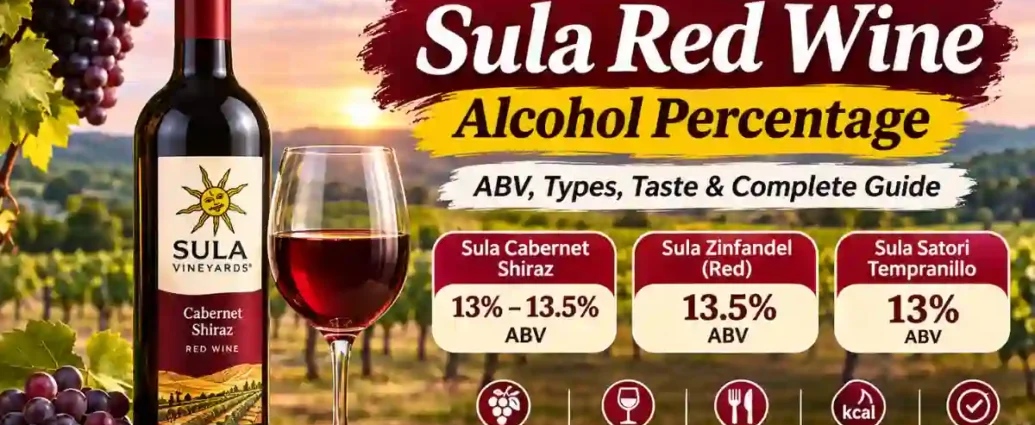
The Sula red wine alcohol percentage generally ranges between 13% and 13.5% ABV, depending on the specific variety and bottling. Popular options include Sula Cabernet Shiraz, Sula Zinfandel and Sula Satori Tempranillo. Although these wines belong to the same brand, their grape varieties, flavour profiles and alcohol levels can differ.
In this guide, we will cover the alcohol percentage of popular Sula red wines, alcohol content by serving size, taste, calories, food pairings, comparisons with other alcoholic drinks and important information about responsible consumption.
Sula Red Wine Alcohol Percentage at a Glance
The alcohol percentage of wine is measured as ABV (Alcohol by Volume). It indicates how much pure alcohol is present in a particular volume of wine. For example, a wine containing 13% ABV has approximately 13 ml of pure alcohol in every 100 ml of wine.
Sula offers several red wine varieties, and their alcohol percentages are not necessarily identical. The following table provides a quick overview of popular options.
| Sula Red Wine Variant | Alcohol Percentage (ABV) |
|---|---|
| Sula Cabernet Shiraz | 13%–13.5% |
| Sula Zinfandel (Red) | 13.5% |
| Sula Satori Tempranillo | 13% |
| Sula RĀSĀ Cabernet Sauvignon | Check bottle label |
| Sula RĀSĀ Syrah | Check bottle label |
| Sula Dindori Reserve Shiraz | Check bottle label |
The most commonly referenced alcohol range for these popular Sula red wine varieties is 13% to 13.5% ABV. However, the exact percentage can vary by product and bottling. Always check the alcohol statement printed on the bottle before purchasing.
What Is Sula Red Wine?
Sula red wine is produced by Sula Vineyards, an Indian wine producer associated with the Nashik wine region of Maharashtra. The brand offers different red wine varieties made using grapes such as Shiraz, Cabernet Sauvignon, Zinfandel and Tempranillo.
Red wine gets its colour and many of its characteristic flavours from contact between grape juice and grape skins during fermentation. This process also contributes tannins, which influence the wine’s texture and mouthfeel.
Sula’s red wine collection includes fruit-forward wines as well as fuller-bodied options. Some varieties have noticeable berry and cherry flavours, while others offer deeper notes of plum, pepper, vanilla and spice.
Sula Red Wine Alcohol Percentage by Popular Variant
Different Sula red wines have different grape compositions and winemaking characteristics. Their alcohol percentages can also vary slightly. Below is a closer look at the popular varieties.
1. Sula Cabernet Shiraz Alcohol Percentage
Alcohol Content: 13%–13.5% ABV
Sula Cabernet Shiraz is a red wine blend made using Shiraz and Cabernet Sauvignon grapes. It combines the fruity character of Shiraz with the structure and depth associated with Cabernet Sauvignon.
Its flavour profile can include blackberry, black plum, ripe cherry, pepper and mocha notes. The combination creates a balanced red wine style that can be paired with a variety of Indian and international dishes.
The alcohol percentage of Sula Cabernet Shiraz is generally listed between 13% and 13.5% ABV, depending on the product specification and bottling. Therefore, check the label of the exact bottle for confirmation.
2. Sula Zinfandel Alcohol Percentage
Alcohol Content: 13.5% ABV
Sula Zinfandel is a red wine made from 100% Zinfandel grapes. It is known for its fruit-forward character and appealing berry flavours.
The wine may offer notes of red berries, blackberries, ripe plums and cinnamon. Its fruity aroma can make it seem sweeter than some other red wines, although fruitiness does not necessarily mean that a wine contains a high amount of residual sugar.
With an alcohol percentage of approximately 13.5% ABV, Sula Zinfandel is one of the higher-alcohol options among the varieties discussed in this guide.
3. Sula Satori Tempranillo Alcohol Percentage
Alcohol Content: 13% ABV
Sula Satori Tempranillo is another red wine option in the Sula collection. It is associated with the Tempranillo grape variety and offers a fruit-focused flavour profile.
Its tasting characteristics can include ripe cherries, plums, red berries, black fruit and gentle spice notes. These flavours make it a suitable choice for people who enjoy fruit-forward red wine styles.
The stated alcohol percentage for Sula Satori Tempranillo is approximately 13% ABV. The exact figure should still be confirmed from the bottle label.
4. Sula RĀSĀ Cabernet Sauvignon Alcohol Percentage
Exact Alcohol Content: Check the Bottle Label
Sula RĀSĀ Cabernet Sauvignon is made from Cabernet Sauvignon grapes. It is a more structured red wine with a flavour profile that can include blackcurrant, blackberry, olive and vanilla.
The wine’s character is influenced by the grape variety and its ageing process. Oak maturation can add further layers of flavour and complexity.
Its exact alcohol percentage should not be assumed from the ABV of other Sula red wines. Check the specific bottle label for the correct figure.
5. Sula RĀSĀ Syrah Alcohol Percentage
Exact Alcohol Content: Check the Bottle Label
Sula RĀSĀ Syrah is a red wine based primarily on Syrah grapes, with a small proportion of Viognier in its blend. It offers a richer flavour profile that can include dark berries, red fruit, vanilla, mocha and spices.
The wine’s fuller character makes it different from lighter and more fruit-forward red wine styles. However, a bold taste does not automatically mean that a wine has a higher alcohol percentage.
For an accurate ABV figure, refer to the alcohol statement printed on the bottle.
6. Sula Dindori Reserve Shiraz Alcohol Percentage
Exact Alcohol Content: Check the Bottle Label
Sula Dindori Reserve Shiraz is a fuller-style red wine associated with Shiraz grapes and a blend that includes Cabernet Sauvignon. Its flavour profile can include smoky notes, cherry, vanilla, red fruit and spice.
Oak maturation contributes to its flavour and aroma. The wine is generally suited to people who enjoy richer and more developed red wine styles.
The exact alcohol percentage can depend on the specific bottling, so it is best to check the label rather than use a general figure.
Sula Red Wine Alcohol Percentage by Bottle Size
Bottle size does not normally change the alcohol percentage of the same wine. For example, a 375 ml bottle and a 750 ml bottle of the same bottling should have the same ABV.
However, the total amount of pure alcohol increases with the quantity of wine. The following table uses 13% ABV as an example to explain the difference.
| Bottle or Serving Size | Pure Alcohol at 13% ABV |
|---|---|
| 90 ml | 11.7 ml |
| 180 ml | 23.4 ml |
| 375 ml | 48.75 ml |
| 500 ml | 65 ml |
| 750 ml | 97.5 ml |
| 1 litre | 130 ml |
These are mathematical calculations, not a confirmation that every Sula red wine is available in all the bottle sizes listed.
How Much Alcohol Is in a Glass of Sula Red Wine?
The amount of alcohol in a glass depends on the serving size and the wine’s ABV. A larger pour contains more alcohol, even when the percentage remains unchanged.
For example, consider Sula red wine containing 13% or 13.5% alcohol.
| Serving Size | Pure Alcohol at 13% ABV | Pure Alcohol at 13.5% ABV |
|---|---|---|
| 100 ml | 13 ml | 13.5 ml |
| 120 ml | 15.6 ml | 16.2 ml |
| 150 ml | 19.5 ml | 20.25 ml |
| 175 ml | 22.75 ml | 23.63 ml |
| 200 ml | 26 ml | 27 ml |
| 250 ml | 32.5 ml | 33.75 ml |
A standard wine glass may hold more liquid than the amount actually poured. Measuring the serving is a more reliable way to understand alcohol intake than judging the quantity by the glass size.
How to Calculate Alcohol in Sula Red Wine
You can calculate the approximate amount of pure alcohol in a glass or bottle using a simple formula.
Pure Alcohol (ml) = Wine Quantity (ml) × ABV (%) ÷ 100
For example, suppose you have a 150 ml serving of Sula red wine containing 13% ABV.
150 × 13 ÷ 100 = 19.5 ml of pure alcohol
Similarly, a 200 ml serving of wine containing 13.5% ABV would contain:
200 × 13.5 ÷ 100 = 27 ml of pure alcohol
This formula works for any alcoholic drink when its volume and ABV are known.
Is Sula Red Wine Strong?
Sula red wine can be considered a standard-strength alcoholic wine. The popular varieties discussed here generally fall between 13% and 13.5% ABV.
However, the word strong can have different meanings. Some people use it to describe the alcohol percentage, while others use it to describe a wine that tastes bold, dry, spicy or full-bodied.
A smooth and fruity wine can still contain a significant amount of alcohol. Therefore, do not judge the strength of wine by its taste or aroma alone. Always check the ABV printed on the bottle.
Sula Red Wine Taste, Aroma and Flavour
Sula red wines offer different flavour profiles depending on the grape variety, blend and ageing process. Some are fruit-forward and smooth, while others have more noticeable tannins, spice and oak characteristics.
| Wine Variant | Main Flavour Characteristics |
|---|---|
| Sula Cabernet Shiraz | Dark cherry, blackberry, plum, pepper and mocha |
| Sula Zinfandel | Red berries, blackberry, plum and cinnamon |
| Sula Satori Tempranillo | Cherry, plum, red berries and spice |
| RĀSĀ Cabernet Sauvignon | Blackcurrant, blackberry, olive and vanilla |
| RĀSĀ Syrah | Dark berries, red fruit, vanilla, mocha and spice |
| Dindori Reserve Shiraz | Smoky notes, cherry, vanilla, red fruit and spice |
These flavour descriptions can help you choose a wine according to your preferences. However, flavour intensity and alcohol percentage are two different things.
What Factors Affect Sula Red Wine Alcohol Percentage?
The alcohol percentage of wine is mainly influenced by the natural sugar present in grapes and the amount of sugar converted into alcohol during fermentation.
Several factors can influence the final alcohol level.
1. Grape Sugar Level
Grapes contain natural sugar, which yeast converts into alcohol during fermentation. Grapes with higher sugar levels can potentially produce wine with a higher ABV if fermentation converts more of that sugar into alcohol.
2. Grape Variety
Different grape varieties develop different levels of sugar, acidity and flavour as they ripen. Cabernet Sauvignon, Shiraz, Zinfandel and Tempranillo do not necessarily produce identical alcohol levels.
3. Climate and Weather
Temperature, sunlight, rainfall and harvest timing can influence grape ripeness. These conditions may affect the natural sugar concentration of grapes and the potential alcohol content of the resulting wine.
4. Fermentation Process
During fermentation, yeast consumes grape sugar and produces alcohol and carbon dioxide. Winemakers control the fermentation process to achieve the intended wine style, balance and flavour.
5. Vintage and Bottling
Wine made from grapes harvested in different years may have slightly different characteristics. Therefore, the ABV of a particular Sula variety may not remain exactly the same across every vintage or bottling.
Sula Red Wine vs Other Alcoholic Drinks
Sula red wine can be compared with beer, white wine, vodka, whisky and rum to understand the difference in alcohol concentration.
| Alcoholic Drink | Typical Alcohol Percentage |
|---|---|
| Low-alcohol beer | Around 2%–3% |
| Regular beer | Around 4%–6% |
| Sula Cabernet Shiraz | 13%–13.5% |
| Sula Zinfandel | 13.5% |
| Sula Satori Tempranillo | 13% |
| Many table wines | Around 11%–15% |
| Vodka | Often around 40% |
| Whisky | Often around 40%–43% |
| Rum | Often around 37.5%–40% |
Is Sula Red Wine Sweet or Dry?
Sula red wine is not limited to one sweetness style. Different varieties can have different levels of residual sugar, which is the natural grape sugar remaining after fermentation.
The following terms are commonly used to describe wine sweetness:
- Dry: The wine contains little residual sugar and does not taste noticeably sweet.
- Off-dry: The wine has a small amount of noticeable sweetness.
- Sweet: The wine retains more sugar and has a clearly sweet taste.
Many traditional red wines are made in a dry style. However, fruity flavours can sometimes make a dry wine seem sweeter than it actually is.
Remember that sweetness and alcohol percentage are separate characteristics. A sweet-tasting wine is not automatically low in alcohol, and a dry wine is not automatically stronger.
How to Read the Alcohol Percentage on a Sula Wine Bottle
The easiest way to confirm the alcohol percentage is to inspect the bottle label. The alcohol information is generally printed on the front or back of the bottle.
Follow these simple steps:
- Find the ABV or alcohol statement on the bottle.
- Look for a number followed by % vol or % ABV.
- Make sure you are reading the alcohol percentage rather than the bottle volume.
- Confirm the wine name and variety.
- Check the back label if the front label does not clearly display the information.
For example, a bottle marked 13% vol contains approximately 13 ml of pure alcohol in every 100 ml of wine. A bottle marked 13.5% vol contains approximately 13.5 ml per 100 ml.
The exact ABV printed on your bottle should always take priority over general product descriptions.
Sula Red Wine Calories and Sugar Content
The calories in red wine mainly come from alcohol and any residual sugar remaining after fermentation. The exact calorie content depends on the wine’s alcohol percentage, sweetness and serving size.
Alcohol provides approximately 7 calories per gram, while residual sugar contributes additional calories. As a result, two red wines with the same ABV may still have different calorie values.
It is not possible to provide one exact calorie or sugar figure for the entire Sula red wine range. The nutritional information, where available, should be checked for the specific product.
A fruity flavour does not necessarily mean that a wine contains a high amount of sugar.
Does Higher Alcohol Percentage Mean Better Red Wine?
No. A higher alcohol percentage does not automatically make a wine better, more premium or more enjoyable.
Wine quality depends on several characteristics, including grape quality, aroma, acidity, tannins, flavour balance, texture and winemaking methods.
A well-balanced wine brings these characteristics together. If the alcohol is too noticeable compared with the other elements, the wine can feel hot or heavy.
A lower-alcohol wine can be just as enjoyable as a higher-alcohol wine, depending on personal preference. When choosing Sula red wine, consider its flavour profile and overall style rather than selecting a bottle only because it has a higher ABV.
Best Food Pairings with Sula Red Wine
Food pairing can bring out different flavours in red wine and make a meal more enjoyable. Sula’s different varieties have different flavour profiles, so their suggested food combinations can also vary.
| Sula Red Wine | Suggested Food Pairings |
|---|---|
| Cabernet Shiraz | Barbecued dishes, chicken tikka masala, rajma masala and mutton rogan josh |
| Zinfandel | Curries, cold cuts, spicy noodles and teriyaki |
| Satori Tempranillo | Grilled vegetables, pasta, kebabs and roasted dishes |
| RĀSĀ Cabernet Sauvignon | Seekh kebabs, kadai paneer, arrabbiata pasta and rogan josh |
| RĀSĀ Syrah | Red curry, nalli nihari, chicken tikka and paneer tikka |
| Dindori Reserve Shiraz | Kebabs, grilled chicken, biryani and aged cheeses |
These are suggested combinations rather than strict rules. You can choose food according to your own taste and the flavour profile of the wine.
How to Store Sula Red Wine
Proper storage helps preserve the quality and flavour of red wine. Exposure to excessive heat, sunlight and frequent temperature changes can affect its characteristics.
Follow these basic storage tips:
- Keep the bottle away from direct sunlight.
- Avoid storing wine near heat sources.
- Maintain a reasonably cool and stable storage temperature.
- Avoid frequent temperature changes.
- Follow the storage instructions printed on the bottle.
- Once opened, reseal the bottle and refrigerate it where appropriate.
The ideal storage method can depend on the wine’s closure and style. After opening, the wine gradually comes into contact with oxygen, which can change its flavour and freshness.
Tips for Drinking Sula Red Wine Responsibly
Understanding the alcohol percentage helps you estimate the amount of alcohol in a serving, but it does not remove the risks associated with drinking.
Alcohol affects people differently depending on body size, food intake, drinking speed, medications and other individual factors.
Keep these precautions in mind:
- Check the ABV before serving.
- Measure the quantity instead of filling a glass without checking its size.
- Avoid drinking quickly or repeatedly refilling your glass.
- Never drink and drive or operate machinery after consuming alcohol.
- Avoid alcohol during pregnancy.
- Do not combine alcohol with medicines or other substances unless a qualified healthcare professional confirms it is safe.
- Never pressure another person to drink.
There is no completely risk-free level of alcohol consumption. Choosing not to drink is the safest option for avoiding alcohol-related harm.
FAQs
What is the alcohol percentage of Sula red wine?
Sula red wines generally contain around 13% to 13.5% ABV, depending on the variety and bottling. Cabernet Shiraz, Zinfandel and Satori Tempranillo are among the popular options in this range.
Is Sula red wine 13% alcohol?
Some Sula red wines contain approximately 13% ABV. Sula Satori Tempranillo is listed at 13%, while Cabernet Shiraz can fall between 13% and 13.5%.
What is the alcohol percentage of Sula Cabernet Shiraz?
Sula Cabernet Shiraz generally contains 13% to 13.5% alcohol by volume. The exact percentage may vary by bottling, so check the label of your bottle.
What is the alcohol percentage of Sula Zinfandel?
Sula Zinfandel contains approximately 13.5% ABV. It is a fruit-forward red wine made from Zinfandel grapes.
What is the alcohol percentage of Sula Satori Tempranillo?
Sula Satori Tempranillo is listed at approximately 13% ABV. The bottle label is the best way to confirm the exact alcohol content.
Is Sula red wine stronger than beer?
In terms of alcohol concentration, Sula red wine at approximately 13%–13.5% ABV is generally stronger than regular beer, which commonly contains around 4%–6% ABV. The total alcohol consumed also depends on the serving size.
How much alcohol is in 150 ml of Sula red wine?
A 150 ml serving of Sula red wine at 13% ABV contains approximately 19.5 ml of pure alcohol. At 13.5% ABV, the same serving contains approximately 20.25 ml of pure alcohol.
Does Sula red wine have more alcohol than whisky?
No. Whisky commonly contains around 40%–43% ABV, which is considerably higher than the approximately 13%–13.5% ABV found in the popular Sula red wine varieties discussed here.
Is Sula red wine sweet or dry?
The sweetness depends on the specific variety. Many traditional red wines are made in a dry style, but their fruity flavours can create a perception of sweetness. Check the product description for the particular wine.
Does Sula red wine alcohol percentage change with bottle size?
No. The alcohol percentage of the same wine generally remains unchanged across different bottle sizes. A 375 ml bottle and a 750 ml bottle can have the same ABV, but the larger bottle contains more total alcohol.
How can I check the exact alcohol percentage of Sula red wine?
Look for the ABV or % vol statement on the front or back label. This gives the alcohol concentration of the specific bottle you are purchasing.
Which Sula red wine has the highest alcohol percentage?
Among the three popular varieties listed in this guide, Sula Zinfandel has the highest stated alcohol percentage at approximately 13.5% ABV. Cabernet Shiraz can also reach 13.5%, depending on the bottling.
Conclusion
The Sula red wine alcohol percentage generally ranges from 13% to 13.5% ABV across the popular varieties covered in this guide. Sula Cabernet Shiraz contains approximately 13%–13.5% alcohol, Sula Zinfandel has around 13.5% ABV, and Sula Satori Tempranillo is listed at approximately 13% ABV.
Other varieties, including RĀSĀ Cabernet Sauvignon, RĀSĀ Syrah and Dindori Reserve Shiraz, should be checked individually because their exact alcohol percentages may differ.
Remember that alcohol strength and taste are two different things. A smooth, fruity wine can still contain a significant amount of alcohol. Before purchasing or serving Sula red wine, check the ABV printed on the exact bottle and pay attention to the quantity poured.
Also, Check Out: Palm Wine Alcohol Percentage || Jacob’s Creek Red Wine Alcohol Percentage || Red Wine Alcohol Percentage