
Port wine is known for its rich flavour, natural sweetness and higher alcohol content compared with regular table wine. It is a fortified wine traditionally associated with Portugal’s Douro Valley. Unlike ordinary wine, Port is made by adding grape spirit during fermentation, which increases its alcohol strength and preserves some natural grape sugar.
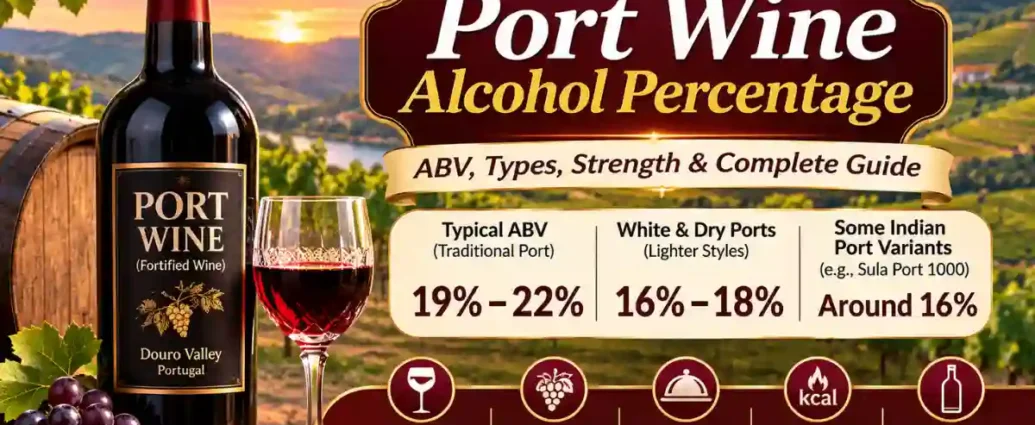
The typical alcohol percentage of traditional Port wine ranges from 19% to 22% ABV. However, the exact percentage depends on the style, producer and product. Ruby, Tawny, Late Bottled Vintage and Vintage Ports generally fall within the traditional range, while some White and Dry Ports can have a lower alcohol content of approximately 16% to 18%.
Indian Port-style wines may also have different alcohol strengths. Some lighter regional variants are bottled at around 16% ABV. Therefore, checking the alcohol percentage printed on the bottle is important before buying or serving Port wine.
Port Wine Alcohol Percentage at a Glance
| Port Wine Details | Information |
|---|---|
| Wine Type | Fortified wine |
| Traditional Alcohol Percentage | 19%–22% ABV |
| Common Alcohol Strength | Around 20% ABV |
| Lower-Alcohol Styles | Some White and Dry Ports |
| White and Dry Port Range | Approximately 16%–18% ABV |
| Some Indian Port Variants | Around 16% ABV |
| Country of Origin | Portugal |
| Traditional Production Region | Douro Valley |
| Main Varieties | Ruby, Tawny, White, Rosé, LBV and Vintage |
| Main Ingredients | Grapes and grape spirit |
| Taste Profile | Sweet, fruity, rich and sometimes nutty |
What Is Port Wine?
Port wine is a fortified wine traditionally produced in Portugal’s Douro Valley. It is made from grapes and becomes stronger through the addition of grape spirit during fermentation. This process distinguishes it from regular red or white wine.
Port wine is available in several styles, including Ruby, Tawny, White, Rosé, Late Bottled Vintage (LBV) and Vintage Port. Each style has its own flavour, colour, sweetness and ageing characteristics.
Most traditional Port wines are sweet or medium-sweet, although dry and extra-dry versions are also available. They are commonly served in smaller quantities because of their higher alcohol concentration.
Port Wine Alcohol Percentage by Type
The alcohol percentage of Port wine is not identical across every style. Traditional Ruby, Tawny, LBV and Vintage Ports commonly contain 19%–22% ABV, while some White and Dry Ports have a lower strength.
| Port Wine Type | Typical Alcohol Percentage |
|---|---|
| Standard Traditional Port | 19%–22% |
| Ruby Port | 19%–22% |
| Tawny Port | 19%–22% |
| Late Bottled Vintage (LBV) | 19%–22% |
| Vintage Port | 19%–22% |
| White Port | Approximately 16%–18% in lighter styles |
| Dry White Port | Approximately 16%–18% in some varieties |
| Rosé Port | Varies by producer |
| Colheita Port | Commonly within the traditional Port range |
| Some Indian Port Variants | Around 16% |
1. Ruby Port Alcohol Percentage
Ruby Port is one of the most popular styles. It has a deep red or ruby colour and is known for its youthful fruit-forward character. Its flavour often includes notes of cherry, blackberry, plum and other dark fruits.
Ruby Port generally contains around 19%–22% ABV. It is usually aged for a shorter period in large containers to preserve its fresh fruit character. It is often enjoyed after meals or alongside chocolate-based desserts.
2. Tawny Port Alcohol Percentage
Tawny Port develops a lighter brownish or amber colour through ageing in wooden barrels. During this period, the wine comes into contact with oxygen, which gradually changes its colour, aroma and flavour.
Its taste can include caramel, toasted nuts, dried fruit, vanilla and spices. Tawny Port commonly falls within the 19%–22% ABV range, although the exact percentage depends on the bottle.
3. White Port Alcohol Percentage
White Port is produced using white grape varieties and can range from dry to very sweet. It is generally lighter in colour than Ruby or Tawny Port and may offer flavours of citrus, apple, honey and tropical fruit.
Some lighter White and Dry Ports contain approximately 16%–18% ABV, although not every White Port has this strength. Always check the bottle label for the exact percentage.
4. Rosé Port Alcohol Percentage
Rosé Port is a relatively modern style with a pink or light-red appearance. It is made to highlight fresh fruit flavours and often has aromas of strawberry, raspberry and other red berries.
Its alcohol percentage varies by producer and product. It should not automatically be assumed to have the same ABV as every traditional Ruby or Tawny Port.
5. Late Bottled Vintage Port Alcohol Percentage
Late Bottled Vintage Port, commonly known as LBV, is made from grapes harvested in a single year. It is aged in barrels or other large containers for a longer period before bottling than a typical Vintage Port.
LBV often has concentrated fruit flavours, a rich texture and a deep colour. Its alcohol strength generally falls within the traditional Port range of 19%–22% ABV.
6. Vintage Port Alcohol Percentage
Vintage Port is made from grapes harvested in a particular year that the producer considers suitable for producing an exceptional wine. It is usually aged for a relatively short period in large containers before bottling and continues developing in the bottle.
It is known for its concentration, complexity and ageing potential. Vintage Port commonly contains around 19%–22% ABV, although the bottle label gives the exact figure.
7. Colheita Port Alcohol Percentage
Colheita Port is a type of Tawny Port made from grapes harvested in a single year. Unlike Vintage Port, it spends an extended period ageing in wooden barrels before bottling.
Its flavour often develops notes of nuts, caramel, dried fruits and spices. Its alcohol percentage generally falls within the traditional Port range, but the exact strength varies by producer.
Alcohol Percentage in Indian Port Wine
Port-style wines sold in India may have different alcohol strengths from traditional Portuguese Port. Some regional products are made in lighter styles and may contain approximately 16% ABV.
For example, Sula Port 1000 is an Indian product that can be discussed separately from traditional Portuguese Port. Its exact alcohol percentage should be confirmed from the specific bottle label, as product details and market variants may differ.
| Port Wine Category | Approximate Alcohol Percentage |
|---|---|
| Traditional Portuguese Port | 19%–22% |
| Some Indian Port-Style Wines | Around 16% |
| Lighter Regional Variants | May be around 16% |
The term Port is often used informally for different fortified or Port-style wines. However, traditional Port has a specific connection with Portugal’s Douro wine region. Indian products should not automatically be assumed to follow the same production rules or alcohol specifications.
Why Does Port Wine Have a Higher Alcohol Percentage?
Port wine has a higher alcohol concentration because it is fortified during production. Unlike regular wine, which usually completes its fermentation naturally, Port production involves adding grape spirit before all the natural grape sugar has been converted into alcohol.
This process stops or slows fermentation and increases the final alcohol strength. The wine also retains some natural sugar, which contributes to its characteristic sweetness.
Main Reasons Behind Port Wine’s High Alcohol Content
1. Addition of Grape Spirit
Grape spirit is added during fermentation to increase the alcohol concentration. This is the main reason traditional Port is stronger than ordinary wine.
2. Fermentation Is Stopped Early
The addition of spirit stops yeast activity before all the grape sugar is converted into alcohol. This helps preserve the wine’s natural sweetness.
3. Natural Grape Sugar
Port grapes contain natural sugars that contribute to the wine’s rich flavour. Some of this sugar remains after fortification.
4. Special Production Method
Port follows a different winemaking process from regular table wine. Fortification gives it a distinctive combination of sweetness, body and alcohol strength.
How Is Port Wine Made?
Port wine production involves several stages, from selecting grapes to fortifying and ageing the wine. The traditional method is closely associated with the Douro Valley in Portugal.
- Grape Selection: Suitable grape varieties are selected from vineyards, with quality and ripeness playing an important role.
- Harvesting: Grapes are harvested when they reach the desired maturity.
- Crushing: The grapes are crushed to release their juice, skins and pulp.
- Fermentation: Yeast begins converting natural grape sugar into alcohol.
- Fortification: Grape spirit is added during fermentation, stopping the process and increasing the alcohol concentration.
- Ageing: The wine is aged in wooden barrels, large containers or bottles depending on its style.
- Blending and Bottling: Some styles are blended to achieve a consistent taste before bottling, while others highlight a particular harvest.
The timing of fortification is important because it affects the wine’s sweetness, alcohol level and final flavour.
Port Wine Alcohol Percentage by Serving Size
The quantity of pure alcohol consumed depends on both the ABV and the amount of wine served. Since traditional Port is stronger than regular wine, even a small serving can contain a considerable amount of alcohol.
The following table shows the approximate pure alcohol content in different serving sizes when Port contains 20% ABV.
| Port Wine Quantity | Alcohol Percentage | Pure Alcohol |
|---|---|---|
| 30 ml | 20% | 6 ml |
| 45 ml | 20% | 9 ml |
| 50 ml | 20% | 10 ml |
| 60 ml | 20% | 12 ml |
| 75 ml | 20% | 15 ml |
| 90 ml | 20% | 18 ml |
| 100 ml | 20% | 20 ml |
| 150 ml | 20% | 30 ml |
| 180 ml | 20% | 36 ml |
| 250 ml | 20% | 50 ml |
A 60 ml serving of Port wine at 20% ABV contains approximately 12 ml of pure alcohol.
Pure Alcohol in Port Wine at Different ABV Levels
The same quantity of wine can provide different amounts of pure alcohol depending on its strength. For example, 60 ml of Port at 19% ABV contains less pure alcohol than 60 ml at 22% ABV.
| Serving Size | At 19% ABV | At 20% ABV | At 22% ABV |
|---|---|---|---|
| 30 ml | 5.7 ml | 6 ml | 6.6 ml |
| 45 ml | 8.55 ml | 9 ml | 9.9 ml |
| 60 ml | 11.4 ml | 12 ml | 13.2 ml |
| 75 ml | 14.25 ml | 15 ml | 16.5 ml |
| 90 ml | 17.1 ml | 18 ml | 19.8 ml |
| 100 ml | 19 ml | 20 ml | 22 ml |
| 150 ml | 28.5 ml | 30 ml | 33 ml |
The calculation uses the following formula:
Pure Alcohol (ml) = Wine Quantity (ml) × ABV (%) ÷ 100
This formula can help estimate the amount of alcohol in any Port wine serving.
Is Port Wine Stronger Than Regular Wine?
Yes. Traditional Port wine generally contains more alcohol than regular table wine. Most ordinary red and white wines have an alcohol concentration of approximately 11%–15% ABV, while traditional Port usually contains 19%–22% ABV.
| Wine Type | Typical Alcohol Percentage |
|---|---|
| Light White Wine | 10%–12% |
| Regular White Wine | 11%–14% |
| Regular Red Wine | 12%–15% |
| Strong Red Wine | 14%–16% |
| Traditional Port Wine | 19%–22% |
| Some Lighter White Ports | 16%–18% |
Port is therefore a stronger wine, and its serving size is generally smaller than that of ordinary table wine.
Port Wine vs Beer vs Whisky: Alcohol Percentage Comparison
Port wine, beer and whisky have different alcohol concentrations because they are produced using different fermentation or distillation methods.
| Alcoholic Beverage | Typical Alcohol Percentage |
|---|---|
| Regular Beer | 4%–6% |
| Strong Beer | 7%–9% |
| Regular Wine | 11%–15% |
| Traditional Port Wine | 19%–22% |
| Some Lighter Port Variants | Around 16% |
| Whisky | Around 40% |
| Vodka | Around 40% |
| Rum | Around 37.5%–40% |
Whisky and vodka are generally stronger than Port because they are distilled spirits. However, Port contains considerably more alcohol than regular beer and most table wines.
Does Port Wine Have More Calories?
Port wine can contain more calories than ordinary dry wine because it combines alcohol with residual natural sugar. Both alcohol and sugar contribute to its overall calorie content.
The exact calorie count depends on the wine’s alcohol percentage, sweetness and serving size. A sweeter Port may have more calories than a drier version with a similar ABV.
| Factor | Effect on Calories |
|---|---|
| Higher ABV | Generally increases calories |
| More Residual Sugar | Adds additional calories |
| Larger Serving | Increases total calorie intake |
| Sweeter Port | May contain more calories |
| Smaller Serving | Reduces total calorie intake |
It is not accurate to assign one calorie figure to every Port wine. Check the producer’s nutritional information when available, and remember that serving size makes a difference.
How Much Sugar Does Port Wine Contain?
Port wine can contain different amounts of residual sugar depending on its style. Fermentation is stopped before all the natural grape sugar is converted into alcohol, which is why many Port wines taste sweet.
However, not every Port is equally sweet. White Port, for example, can range from extra dry to very sweet. Ruby and Tawny Ports are often sweet or medium-sweet, depending on the producer and style.
Common Port Wine Sweetness Categories
| Sweetness Category | Taste Profile |
|---|---|
| Extra Dry | Very little perceived sweetness |
| Dry | Light sweetness |
| Semi-Dry | Balanced sweetness |
| Sweet | Noticeably sweet and fruity |
| Very Sweet | Rich, concentrated sweetness |
Alcohol percentage and sweetness are not the same thing. A Port wine can taste sweet without having a lower alcohol concentration.
What Does Port Wine Taste Like?
Port wine has a rich flavour profile that can include fresh fruit, dried fruit, nuts, caramel, chocolate and spices. Its taste changes according to the grape varieties, ageing process and style.
| Port Wine Type | Common Flavour Notes |
|---|---|
| Ruby Port | Cherry, blackberry, plum |
| Tawny Port | Caramel, nuts, dried fruit |
| White Port | Citrus, apple, honey |
| Rosé Port | Strawberry, raspberry, red berries |
| LBV Port | Dark fruits, spice, chocolate |
| Vintage Port | Concentrated fruit, spice, complex notes |
| Colheita Port | Nuts, caramel, dried fruit |
Younger styles generally highlight fresh fruit flavours, while barrel-aged varieties often develop more complex nutty and caramel-like characteristics.
Best Food Pairings With Port Wine
Port wine is commonly enjoyed after meals, particularly with desserts and cheese. Its sweetness and rich flavour can complement foods that have chocolate, nuts, dried fruits or strong savoury characteristics.
| Food Item | Suitable Port Style |
|---|---|
| Dark Chocolate | Ruby Port |
| Blue Cheese | Tawny or Vintage Port |
| Almond Desserts | Tawny Port |
| Fruit-Based Desserts | Ruby Port |
| Dried Fruits | Tawny Port |
| Nuts | Tawny or Colheita Port |
| Light Appetizers | Dry White Port |
| Chocolate Cake | Ruby or LBV Port |
Food pairing is a matter of personal taste. The sweetness and intensity of the wine should complement the flavour of the dish.
How Should Port Wine Be Served?
Port wine is usually served in smaller glasses and quantities than regular table wine because of its higher alcohol content. The ideal serving temperature depends on the style.
- Ruby Port: Serve slightly cool to highlight its fruit flavours.
- Tawny Port: Serve lightly chilled or at a cool room temperature.
- White Port: Usually served chilled.
- Rosé Port: Serve chilled as a refreshing option.
- Vintage Port: Follow the producer’s serving recommendations; decanting may be appropriate for older or sediment-rich bottles.
A small serving is generally sufficient to appreciate the aroma and taste of Port wine.
How to Store Port Wine
Storage requirements depend on the style and whether the bottle has been opened. Unopened Port should generally be kept away from direct sunlight, heat and sudden temperature changes.
Ruby and Vintage Port: Store unopened bottles in a cool, dark place. Vintage Port may benefit from careful bottle storage and proper ageing conditions.
Tawny Port: Many Tawny Ports are ready to drink when bottled. Follow the storage guidance on the label.
White and Rosé Port: These are often best enjoyed relatively young and should be stored according to the producer’s recommendations.
After opening, Port can gradually lose freshness. Refrigeration and a tightly closed bottle can help preserve its quality, although the suitable storage period depends on the style.
How to Check the Alcohol Percentage on a Port Wine Bottle
The alcohol percentage is usually printed on the front or back label of the bottle. It is commonly displayed as ABV, which means Alcohol by Volume.
For example, if a Port wine bottle displays 20% ABV, it means that approximately 20% of the liquid volume is pure alcohol.
When checking a bottle, look for:
- ABV or Alcohol by Volume: The percentage of alcohol.
- Wine Style: Ruby, Tawny, White, LBV or another variety.
- Producer Details: The brand or winery responsible for the product.
- Bottle Size: The total quantity of wine in the bottle.
- Product Information: Any additional details about sweetness, origin or ageing.
Do not assume that all bottles from the same broad category have exactly the same alcohol percentage.
Is Port Wine Suitable for Beginners?
Port wine has a rich taste and higher alcohol concentration than regular wine. People who are new to wine may find its sweetness appealing, but its strength should not be overlooked.
Some lighter White Ports offer a different flavour profile, while Ruby Port is known for its fruit-forward character. The best choice depends on individual taste, but alcohol content should always be considered.
Anyone who chooses to drink should do so responsibly and avoid driving or operating machinery afterwards. People who are pregnant, under the legal drinking age, taking medicines that interact with alcohol or advised to avoid alcohol should not consume it.
Important Things to Know About Port Wine Alcohol Percentage
- Traditional Port wine generally contains 19%–22% ABV.
- Some White and Dry Ports may contain approximately 16%–18% ABV.
- Some Indian Port-style wines may be bottled at around 16% ABV.
- Fortification is the main reason Port has a higher alcohol percentage than regular wine.
- Ruby, Tawny, LBV and Vintage are popular traditional Port styles.
- A 60 ml serving at 20% ABV contains approximately 12 ml of pure alcohol.
- Port’s sweetness depends on its residual sugar, not only its alcohol percentage.
- Always check the exact ABV printed on the bottle.
Frequently Asked Questions About Port Wine Alcohol Percentage
What is the alcohol percentage of Port wine?
Traditional Port wine generally contains 19%–22% alcohol by volume (ABV). Some lighter White and Dry Ports may have a lower alcohol concentration.
Is Port wine 20% alcohol?
Many Port wines contain approximately 20% ABV, but the exact percentage depends on the producer and style. Some bottles may contain 19%, 21% or 22% alcohol.
Why is Port wine stronger than regular wine?
Port wine is fortified with grape spirit during fermentation. This increases its alcohol concentration and stops fermentation before all the natural grape sugar is converted into alcohol.
Does all Port wine contain 19%–22% alcohol?
No. This is the typical range for traditional Port. Some White and Dry Ports may contain approximately 16%–18% ABV, and some regional Port-style wines may have different strengths.
What is the alcohol percentage of Ruby Port?
Ruby Port generally contains approximately 19%–22% ABV. Its exact strength depends on the producer and bottle.
What is the alcohol percentage of Tawny Port?
Tawny Port commonly falls within the traditional Port range of 19%–22% ABV. Check the bottle label for the exact figure.
What is the alcohol percentage of White Port?
White Port varies according to its style and producer. Some lighter and Dry White Ports contain approximately 16%–18% ABV, while other versions may have a higher percentage.
Is Port wine stronger than red wine?
Yes. Traditional Port generally contains 19%–22% ABV, while most regular red wines contain approximately 12%–15% ABV.
How much alcohol is in 50 ml of Port wine?
At 20% ABV, a 50 ml serving contains approximately 10 ml of pure alcohol. The quantity changes if the bottle has a different alcohol percentage.
How much alcohol is in a 750 ml bottle of Port wine?
A 750 ml bottle at 20% ABV contains approximately 150 ml of pure alcohol. A bottle at 19% contains around 142.5 ml, while one at 22% contains around 165 ml.
Is Port wine sweet?
Many Port wines are sweet because fermentation is stopped before all the natural grape sugar is converted into alcohol. However, White Port is available in dry, extra-dry and sweeter styles.
Conclusion
Port wine is a popular fortified wine known for its rich taste, sweetness and higher alcohol concentration. Traditional Port wine generally contains 19%–22% ABV, making it stronger than most regular red and white wines. Ruby, Tawny, LBV and Vintage are well-known styles, while White and Dry Ports can have a lower alcohol percentage.
Some Indian Port-style wines may also have a different strength, with lighter variants sometimes containing around 16% ABV. Therefore, the exact percentage should always be checked on the bottle rather than assumed from the wine category. Understanding the ABV, serving size and style makes it easier to compare Port wines and make informed choices.
Also, Check Out: Sula Red Wine Alcohol Percentage || Palm Wine Alcohol Percentage || Jacob’s Creek Red Wine Alcohol Percentage || Red Wine Alcohol Percentage